
| Measure | What the data shows | Planning use |
|---|---|---|
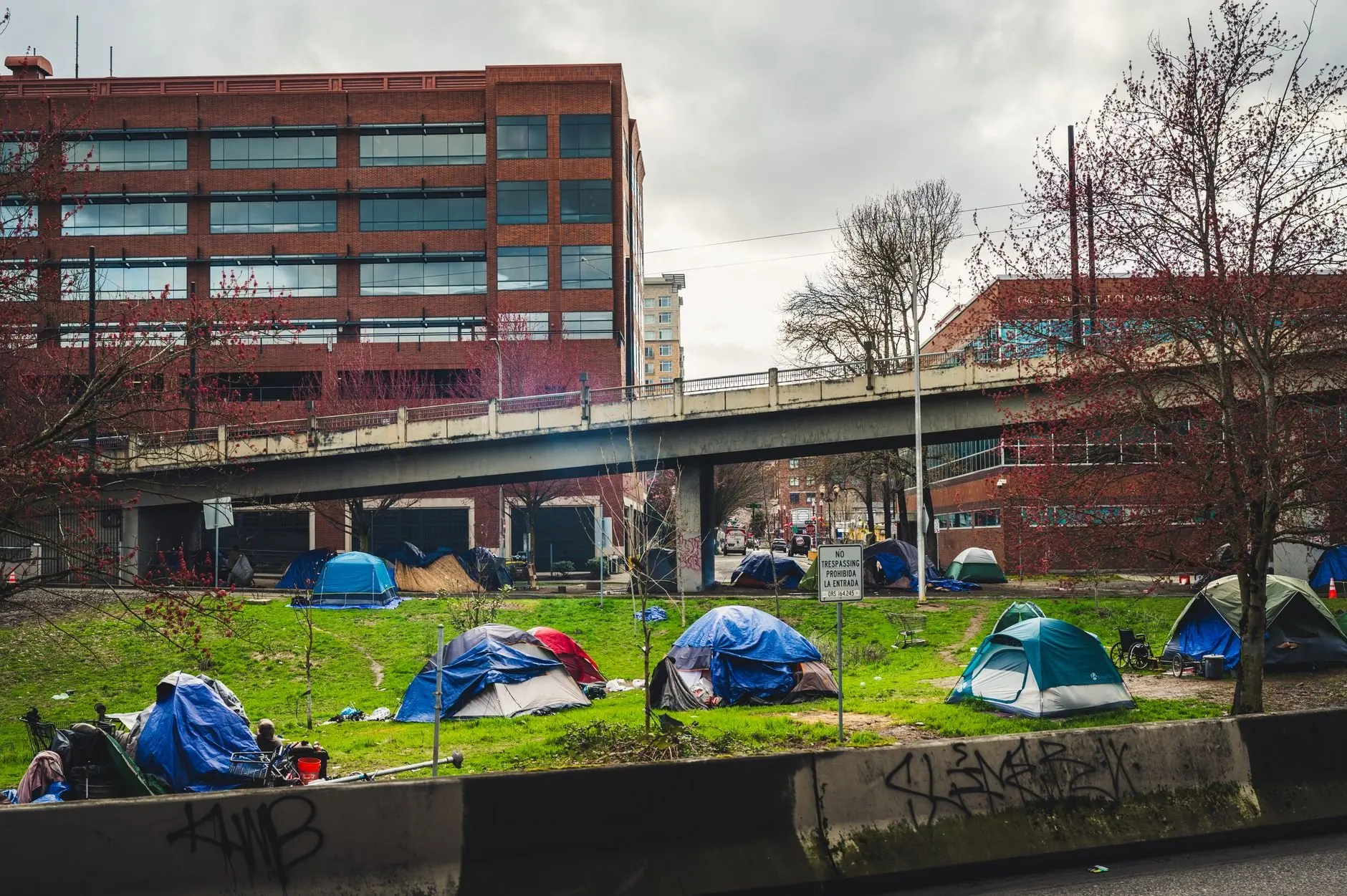
| Unsheltered count | Over 1,000 unsheltered people counted at a single point in time in January 2024 | Treat it as a one-night snapshot of people outside shelter, not an annual total. |
| Families | Unhoused families increased by 14% over the past year in the count Imprint reported; six family shelters operate in Atlanta | Family shelter demand is the pressure point to watch. |
| Chronic homelessness | 29% of people in 2024, up from 17% in 2020 | A growing long-term group points toward housing placement, not only shelter beds. |
| Housing outcomes | 1,850 households housed since 2022 through the unsheltered response initiatives | Read placement results beside the count, because they measure different things. |
Figures come from an Atlanta case study on endhomelessness.org and Imprint News reporting on the city’s count.
Atlanta homelessness is tracked through a one-night count run by Partners for HOME, and the January 2024 count found over 1,000 unsheltered people. That figure is a snapshot, so read it alongside housing-placement data.
The count, the funding behind it and the housing programs it supports each answer a different question. More local coverage sits in atlanta news, which tracks the city decisions around these programs.
What the latest figures mean in practice
Different organizations publish different totals, and each one measures something specific. Matching a number to its measure comes before any judgement about whether the city is gaining or losing ground.
Snapshot totals versus provider intake
Atlanta Mission, a major provider, cites over 2,800 people experiencing homelessness in its community, based on the 2024 point-in-time count. The first is a one-night total from the count, while the second is a year of requests to one provider. Use the count for scale on a given night and provider intake for demand on that provider, and avoid presenting one as the trend of the other.
Chronic homelessness and who is unsheltered
The Atlanta case study reports that 29% of people were experiencing chronic homelessness in 2024, up from 17% in 2020. Among people experiencing chronic homelessness, 62% were unsheltered in 2024, up from 54% in 2020. It also reports that 83% of people experiencing unsheltered homelessness are Black, while 47% of the city’s population is Black.
- Long-term housing over short stays. A larger chronic share suggests that temporary shelter alone does not resolve the situation for a growing group.
- Outreach reach. With most chronically homeless people unsheltered, street outreach is the point of contact for that group.
- Disparity as a test. The gap between 83% and 47% makes it fair to ask whom a program actually reaches, not only how many it serves.
Families
Imprint reported that unhoused families increased by 14% over the past year, and that families awaiting placement in shelters or housing are not counted. The count therefore measures a narrower group than every family in need. Readers following how housing instability reaches classrooms can use atlanta public schools news for the school side of the story.
Housing First and the housing-focused response
Atlanta’s unsheltered response is built around moving people into housing rather than managing them on the street. In the LIFT 2.0 initiative, participants received either time-limited rental subsidies with case management or permanent supportive housing. That pairing of a housing placement with support services is how Housing First shows up in local practice.
The same case study describes the scale and the funding. It says the effort used federal COVID-19 response funds, including about 200 Emergency Housing Vouchers. In 2024 the Bridge Initiative engaged nearly 800 individuals in 36 encampments, resulting in 250 housing move-ins. Since 2022 the Continuum of Care has housed 1,850 households through these initiatives.
These are placement figures. A move-in count shows how many people entered housing, not how long they stayed, so it supports claims about throughput rather than lasting outcomes. Programs that offer time-limited subsidies and programs that offer permanent supportive housing also serve different needs, which is worth remembering when a single housing number is quoted.
Where to find shelter and services
Atlanta Mission is described by Imprint as the city’s oldest and largest homeless service provider, and it has three shelters. For families, Partners for HOME counts six family shelters in Atlanta. Nicholas House has room for up to 12 families, or 50 people, at a time and aims to help families move into more permanent housing within 60 days.
- Single adults seeking a bed. Atlanta Mission is the largest starting point, and its published intake shows heavy demand.
- Families. The six family shelters are the relevant pool, and the Nicholas House capacity shows how small each one can be.
- People who need help navigating housing. A case-management provider is a better fit than a bed alone, as the FAQ below explains for Hope Atlanta.
How the count is conducted
The point-in-time count is a federally mandated initiative by the U.S. Department of Housing and Urban Development, carried out as a one-night count. In the Atlanta count Imprint described, volunteers canvassed Atlanta’s 243 neighborhoods on Jan. 27, and Partners for HOME was the nonprofit that conducted the city’s annual count.

A volunteer canvass on a single night produces a point-in-time estimate.
Partners for HOME and the Continuum of Care
Partners for HOME leads the Atlanta Continuum of Care, which the case study describes as a partnership of 170 nonprofit, government, and other community organizations. In practice that makes Partners for HOME the coordinator and funder of the local response, and the body that conducts the annual count. It funded seven agencies to conduct street outreach as part of LIFT 2.0.

For readers, the useful point is accountability. Claims about the local system should name the Continuum of Care, whose members include government and nonprofit organizations, rather than a single agency. The neighborhood layer of city decision-making is covered in the explanation of the atlanta npu system.
How funding is allocated
The supported funding lines are federal and Continuum-directed rather than a single city budget item. Imprint reports that the count is required by the federal government to receive critical funding for homeless services.

The case study also concludes that funding dedicated specifically to house encampment residents is a crucial component of these initiatives. City-level appropriations are set through council budget records, which are the place to verify any specific city dollar claim.
Frequently asked questions
Why does Atlanta take part in the annual count?
Imprint reports that the survey is required by the federal government for the city to receive funding for homeless services, so it directly affects what the local system can pay for.
What help does Hope Atlanta provide?
Hope Atlanta states that it works with clients one-to-one to understand their situations and to help them obtain housing and other basic needs, which suits people who need case management more than a single night’s bed.
How much of Georgia’s homelessness is in Atlanta?
Atlanta Mission says Atlanta is home to over a quarter of the state’s homeless population of nearly 10,000.