

If you’re wondering how a railroad survey stake became a metro of more than 6 million people, here’s the answer. Atlanta history began in 1837, when engineers marked the end of a rail line; railroads, race relations and civic ambition did the rest.
This short history sits inside the atlanta guide, which looks at the city as a whole.
| Item | Value |
|---|---|
| Founded | 1837 |
| First name of the settlement | Terminus (“end of the line”) |
| Renamed Marthasville | 1843 |
| Population in 1860 | 9,554 people |
| City population, 2020 census | 498,715 people |
| Metro area population | More than 6 million people |
These figures come from the New Georgia Encyclopedia entry on Atlanta. Figures can change, so check the source before you rely on them.
A railroad terminus in the 1830s
Atlanta owes its origins to two developments in the 1830s. One was the forcible removal of Native Americans, principally Muscogee (Creeks) and Cherokees, from northwest Georgia. The other was the extension of railroad lines into the state’s interior, as the New Georgia Encyclopedia explains.
In 1837, engineers for the state-sponsored Western and Atlantic Railroad staked out a point on a ridge about seven miles east of the Chattahoochee River. It was meant to be the southern end of a line running south from Chattanooga, Tennessee. The town that grew around this zero milepost was called Terminus, which literally means “end of the line.”
Had that remained its only rail link, the town might have stayed a small frontier outpost. By 1846, according to the encyclopedia’s Atlanta entry, two other lines had converged with the Western and Atlantic in the center of town. Its railroads entry adds that a fourth line, the Atlanta and LaGrange Railroad, arrived from the southwest in 1854, and soon the city was a rail hub for the entire South.
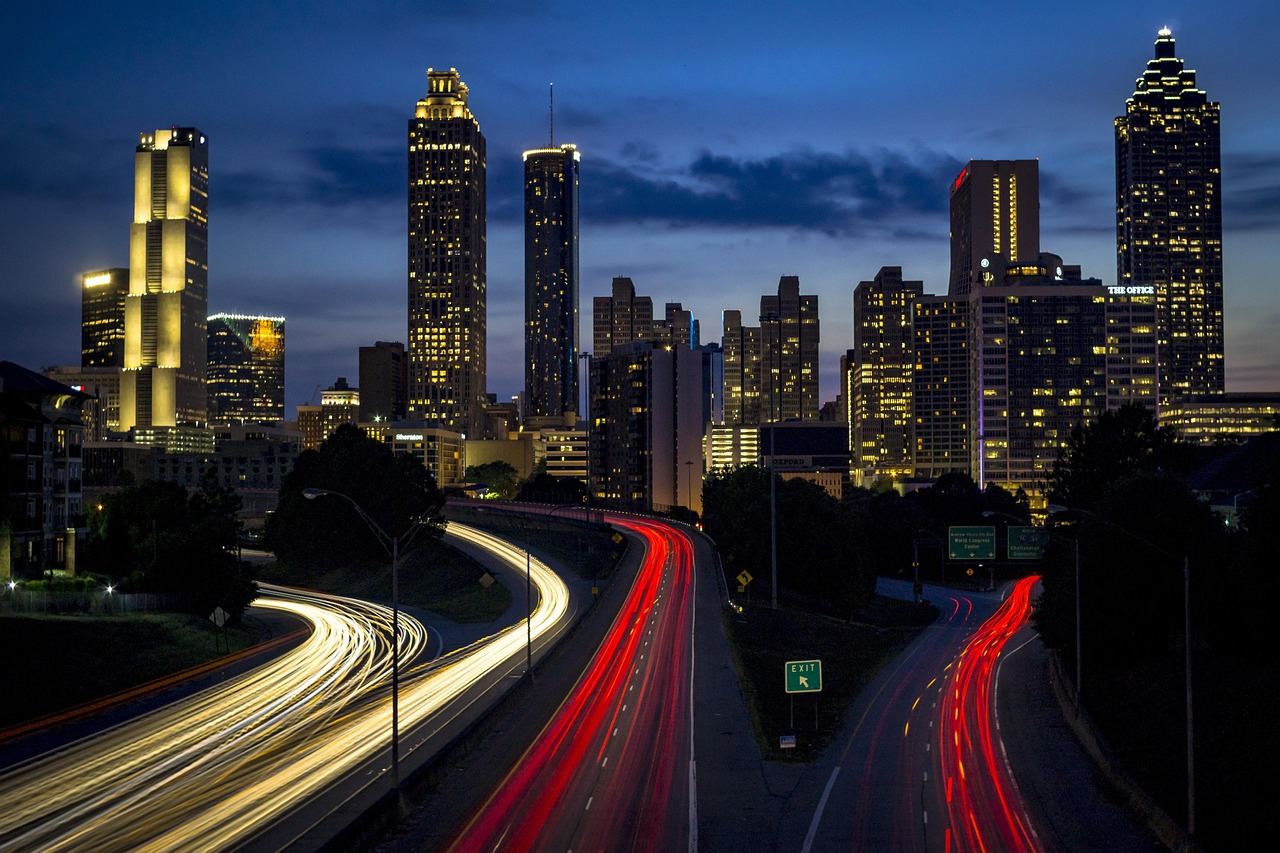
How did the town get its name?
The settlement changed its name twice. In 1843 it became Marthasville, honoring the daughter of former governor Wilson Lumpkin, who had played a key role in bringing the railroad to the area. Two years later the city adopted the name Atlanta.
The origin of “Atlanta” is a little murky. The name is supposedly a feminine version of Atlantic, first used by John Edgar Thomson, chief engineer of the Georgia Railroad, for his railroad’s local depot. A story that Lumpkin traced it to his daughter’s middle name, Atalanta, appears to be apocryphal, per the encyclopedia.
A HistoryNet account notes that various stories exist, including a reference to the swift, powerful huntress of Greek mythology.
The Civil War: a rail hub under siege
By 1860 Atlanta was home to 9,554 people and was already the fourth largest city in the state. Enslaved African Americans and free persons of color were part of that population, though in smaller numbers than in the older port cities of the South. Laws and customs strictly controlled the activities and freedoms of both groups.
Antebellum Atlanta was led by merchants and railroad men, not planters, and businessmen and voters there tended to oppose secession, often on economic grounds. Even so, when Georgia seceded in January 1861, Atlanta joined the Confederacy and quickly became strategically important.
The city turned into a home-front workshop for the war effort:
- The Confederate government arsenal produced percussion caps, ammunition, saddles, canteens and other military items, and employed more than 5,000 men and women.
- The Quartermaster Depot ran a shoe factory, a tannery and a clothing depot that employed more than 3,000 seamstresses.
- Together, these industries swelled the population from 9,000 people in 1860 to some 22,000 four years later.
Those same qualities made Atlanta a tempting target. In the summer of 1864 General William T. Sherman’s troops closed in, and from July 20 to August 25 the city was bombarded heavily, with civilians killed and buildings badly damaged, as the New Georgia Encyclopedia recounts.
On June 28, 1864, Georgia Governor Joseph E. Brown had telegraphed Confederate President Jefferson Davis that Atlanta was to the Confederacy “almost as important as the heart is to the human body,” according to HistoryNet. Union troops finally seized the city in 1864 after hard-fought battles along the route of the Western and Atlantic, per the railroads entry.
Three forces that shaped the city
The encyclopedia’s author, Andy Ambrose of the Atlanta History Center, argues that three forces have driven the city’s development. At each stage in its growth, all three came into play.
- Transportation: rail connections helped establish Atlanta as a state and regional center of commerce and finance.
- Race relations: issues dating back to the years before the Civil War have affected the city’s layout, political structure, municipal services and educational institutions. They also produced conflicting images of Atlanta as a segregated southern city and as a “Black mecca.”
- The “Atlanta spirit”: part civic boosterism, part vision, with a healthy dose of business interests and priorities.
Rail kept shaping the story after the war. When a holding company collapsed in 1892, the banker J. P. Morgan created Southern Railway from the wreckage, and in 1904 a link from Atlanta to Birmingham, Alabama, was added by Seaboard’s predecessors, per the railroads entry.
By the 1920s railroads covered almost all of Georgia, the high point of rail service in the state. Passenger service then declined steadily after 1920 as automobiles became affordable, and the low point came in the 1960s and 1970s, when the great terminal stations and union stations in Atlanta, Augusta and Savannah were demolished.
Atlanta today and where to go next
Atlanta is the capital of Georgia, the state’s largest city and the seat of Fulton County. The 2020 census counted 498,715 residents, while the metro area, which spans twenty-eight counties and more than 6,000 square miles, has more than 6 million, according to the New Georgia Encyclopedia.
The city also sits at a mean elevation of 1,050 feet (320m) above sea level, which the same source says contributes to a more temperate climate than areas farther south.
Once you know the story, the things to do in atlanta page is a good way to see where it unfolded. If you’re arriving by air, the guide to getting from hartsfield-jackson airport to downtown covers the trip into the city.
Frequently asked questions
When was Atlanta founded?
Show answer
Atlanta was founded in 1837, a century after Savannah, the state’s oldest city, according to the New Georgia Encyclopedia.
Why was the town first called Terminus?
Show answer
Engineers chose the spot as the southern end of the Western and Atlantic rail line, and Terminus literally means “end of the line.”
Why did the Civil War reach Atlanta?
Show answer
Atlanta was a rail hub and a producer of war materials such as ammunition and shoes. Governor Joseph E. Brown called it to the Confederacy almost as important as the heart is to the human body.
How many people live in Atlanta?
Show answer
The 2020 U.S. census counted 498,715 people in the city. The wider metro area has more than 6 million, per the New Georgia Encyclopedia.