
Not sure where to start with Georgia state parks? Start with mountain waterfalls, the Okefenokee Swamp and Tallulah Gorge, then add a historic site for context. Here is how to choose.
This guide is part of the georgia news section of this site.
| Item | Value |
|---|---|
| Land protected | More than 85,000 acres |
| Parks and historic sites | More than sixty |
| Managing agency | A division of the Department of Natural Resources |
| State parks system created | 1931 |
| Park acreage growth in the mid-1930s | From 500 to 5,000 acres |
| Mammal species in the Okefenokee Swamp | More than forty |
These figures come from the New Georgia Encyclopedia entry, last edited in April 2021. Acreage and site counts can change, so check the source or the state’s own park pages before you rely on them.
What the Georgia state parks system covers
Georgia State Parks and Historic Sites, a division of the Department of Natural Resources, protects more than 85,000 acres at more than sixty parks and historic sites, as of the New Georgia Encyclopedia entry last edited in April 2021. That is a wide range of places, so it helps to sort them by what you want from a day out.
The same entry describes the system as a mix of inland and coastal sites:
- The Blue Ridge Mountains, with perhaps the most scenic stretch at Black Rock Mountain State Park.
- The “Colonial Coast”, which takes in a portion of the Atlantic shoreline and all the Sea Islands.
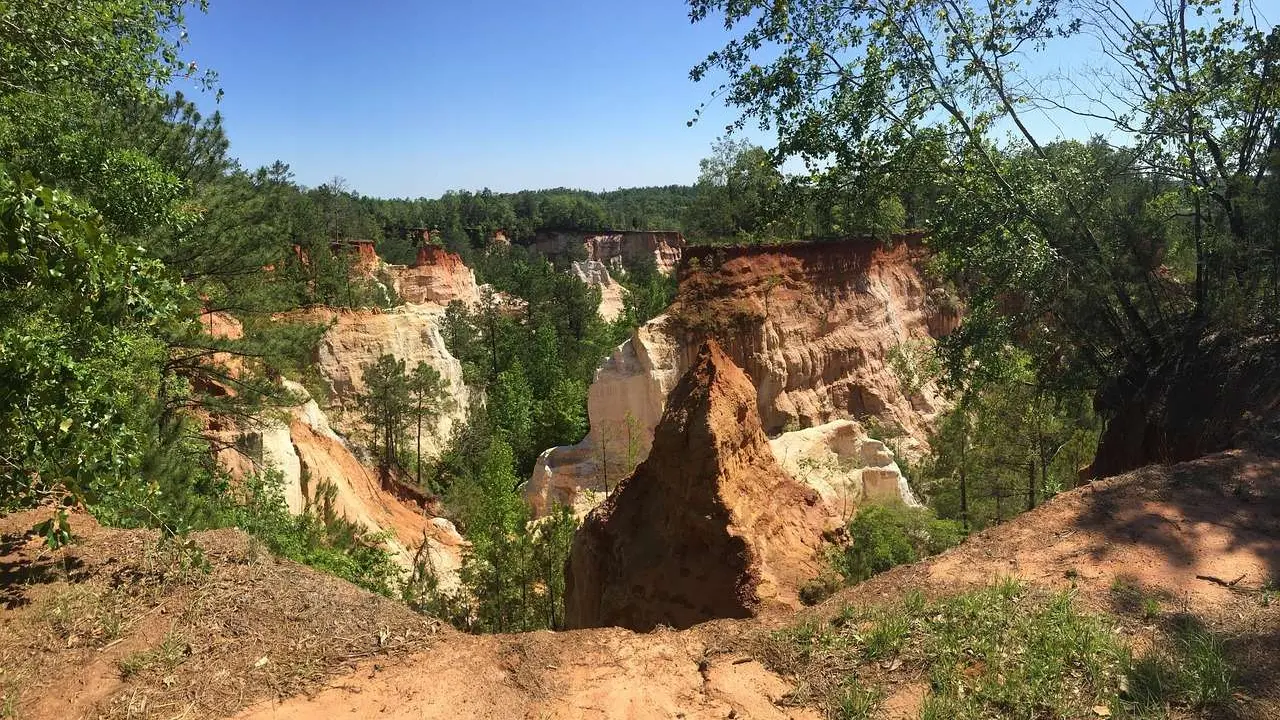
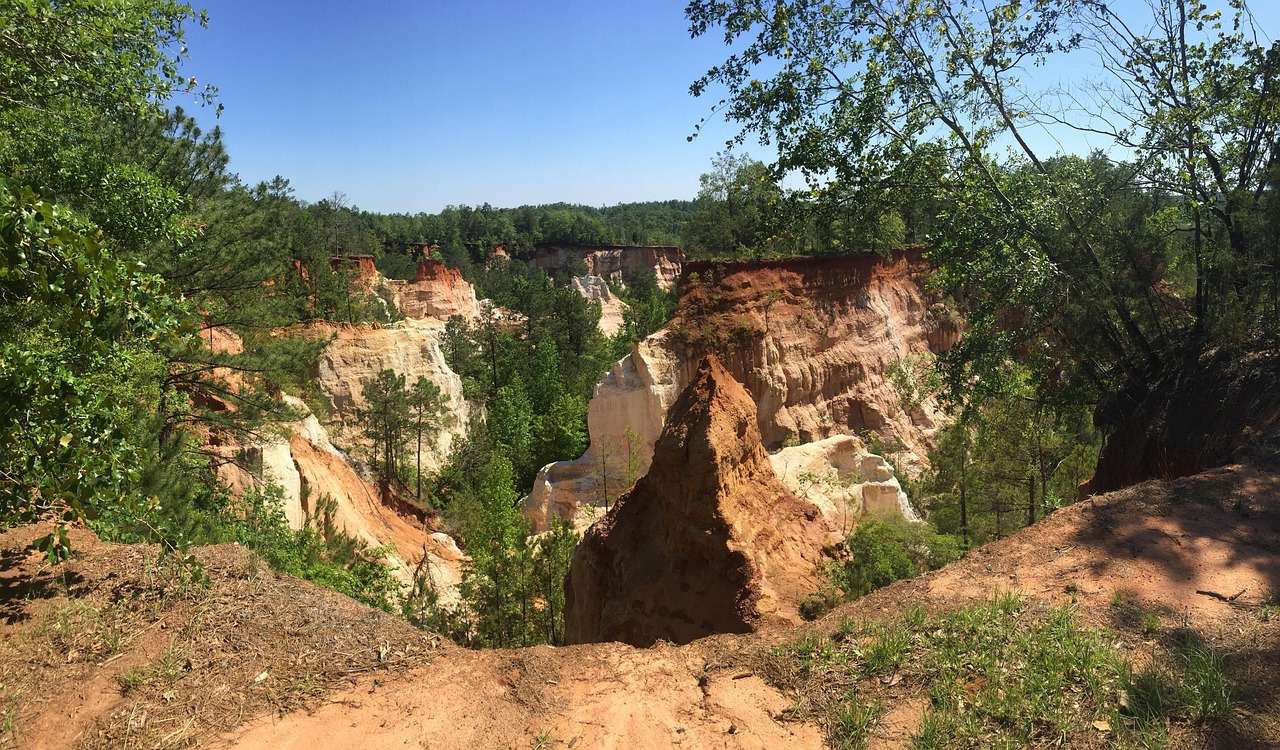
- Sites in between, including Amicalola Falls, the Okefenokee Swamp, Providence Canyon and Tallulah Gorge.
- State historic sites, from Indian mounds to battlefields.
Natural highlights worth the drive
If you want big scenery, begin with Black Rock Mountain State Park. The encyclopedia says the Blue Ridge Mountains lie along the Eastern Continental Divide and that perhaps their most scenic stretch is found at this park.
Three other names appear in the same description of the system’s landscapes: Amicalola Falls, Providence Canyon and Tallulah Gorge. Each is a good anchor for a day trip, and each suits a different mood, from waterfall views to canyon and gorge walks.
Another early name is Vogel, which the state created in 1931 as one of its first two parks. It sits near Blood Mountain in Union County, and you can read more in the encyclopedia’s history of the system.
The Okefenokee Swamp and the coast
For wildlife, the Okefenokee Swamp is the standout in the source. The encyclopedia counts more than forty species of mammals, more than fifty species of reptiles, sixty species of amphibians and thirty-four species of fish there, according to its state parks entry.
The coast offers something different. Georgia’s Colonial Coast takes in a portion of the Atlantic shoreline and includes all the Sea Islands.
Coastal trips depend on the weather, so read up on georgia hurricane season before you lock in dates. The broader georgia climate picture also helps when you decide which season suits swamp, mountain or shoreline.
Historic sites that add depth
The system is not only about nature. The encyclopedia notes that state historic sites add variety, including ceremonial Indian mounds, Revolutionary War forts, Civil War battlefields and plantations.
Two sites are named outright:
- New Echota, the Cherokee Indian capital.
- Franklin D. Roosevelt’s Little White House in Warm Springs.
Pairing one of these with a nature stop makes a fuller day. A morning on a trail followed by an afternoon at a historic site gives you both the landscape and the story behind it.
How the Georgia state parks system grew
Georgia joined the national state-parks movement in 1927, when the state senate called for a resolution to preserve the Indian Springs Reserve in Butts County. The New Georgia Encyclopedia says the parks system itself was created in 1931, and the Department of Natural Resources was established in 1937.
The Civilian Conservation Corps, organized in 1933, did much of the early work. Its workers built dams, fought forest fires, planted trees and constructed trails, and in the mid-1930s the state’s parks grew from 500 to 5,000 acres with federal help.
The history also includes the era of segregation. The first park for Black citizens, George Washington Carver on Lake Allatoona, was built in 1950 through the efforts of John L. Atkinson Sr., the state’s first Black park superintendent, according to the same entry.
How do you plan a visit?
Start with what you want to do, then pick the park. A 2014 guide to the parks listed these types of facilities and activities:
- Campgrounds, cabins and yurts
- Group facilities
- Fishing lakes and streams
- Hiking and biking trails
- Golf courses and museums
- Family events
That guide is a decade-old snapshot, so treat it as a list of what parks can offer rather than a current menu. The same publication states that fees, hours and facilities are subject to change, and it tells readers to check the parks’ website or call the sites directly for the latest information.
Frequently asked questions
How big is the Georgia state parks system?
Show answer
As of the New Georgia Encyclopedia entry last edited in April 2021, it protects more than 85,000 acres at more than sixty parks and historic sites.
Who runs the parks?
Show answer
Georgia State Parks and Historic Sites is a division of the Department of Natural Resources, according to the encyclopedia entry.
When did the system begin?
Show answer
The encyclopedia says the Georgia State Parks System was created in 1931, with Indian Springs and Vogel as its first two parks. The state had taken its first step in 1927 with the Indian Springs Reserve.
Which park should a first-time visitor try?
Show answer
It depends on what you want. Black Rock Mountain suits mountain views, the Okefenokee Swamp suits wildlife, and a historic site such as New Echota suits history. The encyclopedia describes each of these.
Can you camp in Georgia’s state parks?
Show answer
A 2014 state guide listed campgrounds, cabins and yurts among the facilities. Check current availability and fees with the parks directly before you plan around them.